Losing a tooth can feel like more than just a gap in your smile. It can change the way you chew, speak, and even how confident you feel day to day. Many people start searching for a tooth replacement option and quickly come across the term dental implant. It sounds technical, yet the concept is surprisingly straightforward. A dental implant is designed to replace the root of a missing tooth and provide a stable foundation for an implant supported crown, bridge, or denture.
Rather than simply filling the space above the gum, implant dentistry focuses on restoring structure beneath the surface. This approach supports oral rehabilitation in a way that aims to restore both function and stability.
What Exactly Is a Dental Implant?
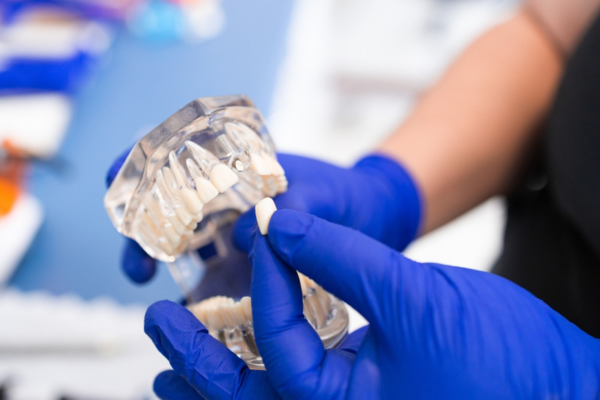
A dental implant is a small titanium implant post or zirconia alternative that is surgically placed into the jawbone. It acts as an artificial tooth root. Over time, the surrounding bone integrates with the implant surface through a biological process known as osseointegration. This integration allows the implant to become firmly anchored in the jawbone.
Once healed, the implant can support a restoration such as:
- A single tooth implant with a custom crown
- An implant supported bridge for multiple tooth replacement
- A full arch restoration for extensive tooth loss
- Support for implant retained dentures
Because the implant sits within the bone, it provides jawbone support that traditional removable dentures do not offer. This is one reason many people consider it a long term missing tooth solution.
How Does an Implant Compare to Other Tooth Replacement Options?
When exploring restorative dental treatment, it is helpful to understand how implants differ from alternatives such as bridges or removable dentures.
| Feature | Dental Implant | Dental Bridge | Removable Denture |
| Replaces tooth root | Yes | No | No |
| Supports jawbone | Yes | No | No |
| Involves adjacent teeth | Usually not required | Often requires preparation | Not required |
| Fixed in place | Yes | Yes | No |
| Designed for long term use | Yes, with maintenance | Yes, may need replacement | May require adjustment |
Dental implants are not the only option, and part of any dental implant consultation includes discussing alternatives to ensure the most appropriate treatment suitability for each person.
Who Might Be a Suitable Candidate for a Dental Implant?
Not everyone with a missing tooth is automatically suitable for implant placement. A detailed oral health screening is essential.
In general, a candidate may have:
- One or more missing teeth
- Adequate bone density to support an implant
- Healthy gum tissue
- Stable general health
- A commitment to maintaining good oral hygiene
Bone density assessment is particularly important. The implant relies on sufficient bone volume for stability. If bone has been lost over time, additional procedures may need to be discussed before implant placement.
What Factors Influence Treatment Suitability?
Several factors are considered during a dental implant consultation.
Bone and Jaw Structure
Adequate bone volume is essential for osseointegration. Digital imaging such as CBCT scanning may be used to assess bone levels and anatomical structures.
Gum Health
Active gum disease can affect healing and long term outcomes. Gum health evaluation ensures the tissue around the implant can remain stable.
General Health
Certain medical conditions or medications may influence healing. A thorough medical history review is part of responsible implant dentistry.
Lifestyle Considerations
Smoking and teeth grinding may increase the risk of complications. These factors are discussed openly to support informed decision making.
What Happens During the Assessment Phase?
Before proceeding with a surgical placement procedure, clinicians conduct:
- A comprehensive oral examination
- Digital imaging for treatment planning
- Review of oral hygiene habits
- Discussion of restorative goals
- Explanation of risks, alternatives, and variability of outcomes
This step ensures the treatment is tailored to the individual rather than taking a one size fits all approach.
What Should You Know About Osseointegration and Healing?
Osseointegration refers to the natural process where bone cells attach to the implant surface. This biological integration is what allows the implant to function like a natural tooth root. Healing times vary between individuals and can depend on bone quality, overall health, and the area of the mouth being treated.
During this period, careful maintenance and follow up reviews are essential to support successful integration.
Why Is Jawbone Support Important?
When a tooth is lost, the surrounding jawbone can gradually reduce in volume due to lack of stimulation. Because a dental implant is placed within the bone, it helps transmit chewing forces in a way that supports bone preservation. This structural consideration is one reason implants are often included in discussions about long term oral rehabilitation.
How Does This Relate to Everyday Life?
From chewing your favourite foods to speaking clearly in meetings, stability matters. A single tooth implant or implant supported crown can feel more natural compared to removable options. However, it is important to understand that every procedure involves potential risks, and outcomes vary between individuals.
Why Consider Treatment at Terrigal Beach Dental + Implant Centre?
At Terrigal Beach Dental + Implant Centre, the focus is on personalised implant dentistry that blends advanced digital imaging with careful planning and open discussion. Every dental implant consultation includes a detailed bone density assessment, gum health evaluation, and clear explanation of restorative dental treatment options.
Patients are guided through the process with transparency, including discussions about alternatives such as bridges or dentures, so decisions are made with confidence. The environment is calm, professional, and centred around long term oral rehabilitation rather than quick fixes. If you are considering a missing tooth solution and want clear information tailored to your circumstances, Terrigal Beach Dental + Implant Centre provides a structured and supportive approach.
References
Australian Dental Association. Dental implants information page.
https://www.ada.org.au
Australian Government Department of Health. Oral health and general health resources.
https://www.health.gov.au
Dental Board of Australia. Guidelines for advertising regulated health services.
https://www.dentalboard.gov.au
Frequently Asked Questions
1. How long does a dental implant last?
Dental implants are designed as a long term tooth replacement option. Longevity depends on oral hygiene, gum health, and individual factors.
2. Is implant placement painful?
The procedure is performed under local anaesthetic. Some swelling or discomfort may occur afterwards, which is usually temporary.
3. Can anyone have a dental implant?
Not everyone is automatically suitable. Bone density, gum health, and medical history are assessed before treatment.
4. What is osseointegration?
Osseointegration is the process where the jawbone integrates with the titanium implant post, creating stability.
5. Are implants better than bridges?
Each option has advantages and considerations. Suitability depends on the condition of surrounding teeth and bone.
6. How do I care for a dental implant?
Implants require brushing, flossing, and regular dental reviews similar to natural teeth.
Disclaimer
All dental procedures involve potential risks and benefits. The information provided in this blog is general in nature and should not be taken as medical advice. We recommend that you seek guidance from a suitably qualified health professional before making decisions about your oral health. Where appropriate, you may also wish to consider obtaining a second opinion.
Any images or videos featured are shared with the informed consent of our patients and are intended for educational purposes only. They are not a guarantee of results, as every patient is unique. Treatment outcomes — including recovery, potential complications, and effectiveness — can vary from person to person.