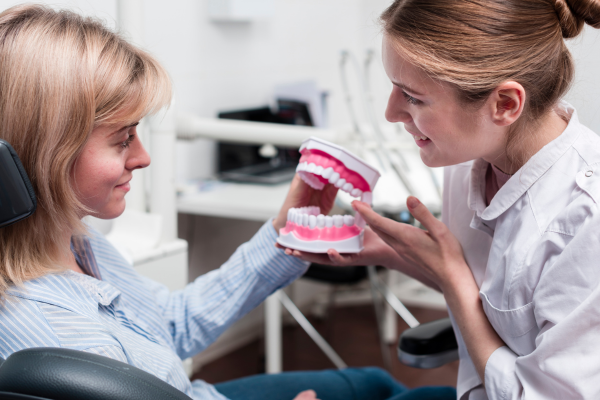
When considering options for replacing missing teeth, patients often find themselves weighing up between implant-supported dentures and traditional dentures. Both offer solutions for full arch restoration, but they differ significantly in how they function, feel, and impact long-term oral health. Understanding the differences in design, fit, function, and maintenance can empower patients to make more informed choices about their prosthetic teeth options.
What Are Traditional Dentures?
Traditional dentures are removable dental prostheses designed to replace missing teeth and the surrounding gum tissue. Typically made from acrylic, these dentures rest directly on the gums and are held in place by suction, muscle control, and sometimes denture adhesive.
Key Features:
- Non-surgical
- Custom moulded to fit your gums
- Can be full (entire arch) or partial (specific gaps)
- Easily removed for cleaning
While widely used and accessible, traditional dentures can sometimes lead to issues with slippage, speech interference, and bone loss over time due to a lack of stimulation to the jawbone.
What Are Implant-Supported Dentures?
Implant-supported dentures are a modern restorative solution that combines the structure of dental implants with a denture prosthesis. The denture is anchored to titanium implants surgically placed in the jawbone, providing a secure and stable fit.
Common Options:
- Fixed dentures (permanently secured)
- Removable overdentures (snap on/off for cleaning)
Unlike traditional removable options, implant-supported dentures are more stable and may assist with jawbone preservation due to the stimulation implants provide to the underlying bone.
How Do They Compare in Terms of Stability and Function?
One of the main differences between implant-supported and traditional dentures lies in their retention and stability.
Implant-supported dentures:
- Secured directly to the implants, reducing movement
- Less likely to dislodge while eating or speaking
- Suitable for patients who experience discomfort from loose dentures
Traditional dentures:
- May shift or move, especially if the fit loosens over time
- Often require adhesives for improved stability
- Muscle control is important for maintaining position
This increased retention in implant-supported options can lead to improved oral function, particularly for chewing a wider range of foods and improving speech clarity.
What Are the Oral Health Benefits and Considerations?
Traditional dentures do not stimulate the underlying jawbone, which can lead to gradual bone resorption. This can alter the fit of the denture over time, often requiring relining or replacement.
On the other hand, implant-supported dentures can provide functional stimulation to the jawbone, potentially assisting in maintaining bone volume. This may help support facial structure and improve long-term oral health outcomes.
However, it is important to consider:
- Not all patients are suitable for implants due to medical history or insufficient bone density
- Surgical procedures carry risks including infection, nerve injury, and implant failure
- Healing time is required after implant placement
What About Maintenance and Daily Care?
Caring for both types of dentures requires good oral hygiene habits, but the approach varies slightly.
Traditional dentures:
- Must be removed daily for cleaning
- Soaked in a cleaning solution overnight
- Rinsed after eating to remove debris
- May require periodic relining to maintain fit
Implant-supported dentures:
- Fixed types are cleaned like natural teeth with brushing and flossing aids
- Removable versions can be taken out for cleaning
- Maintenance around the implants is essential to prevent inflammation or infection
- Regular dental visits are important for monitoring implant health
Who Is a Suitable Candidate for Each Option?
Every patient’s oral and general health needs to be carefully assessed before deciding on a treatment pathway.
Implant-supported dentures may be suitable for:
- Adults with adequate jawbone volume
- Patients who are generally in good health
- Individuals seeking improved retention and function
Traditional dentures may be appropriate for:
- Those unable or unwilling to undergo surgery
- Patients with significant bone loss
- People looking for a removable, established tooth replacement option
It is crucial to have a comprehensive dental examination to determine suitability for any type of prosthesis, including imaging to assess bone levels and overall health considerations.
Comparison Table: Implant-Supported Dentures vs Traditional Dentures
| Feature | Implant-Supported Dentures | Traditional Dentures |
| Stability | High – Secured to dental implants | Moderate – May shift without adhesive |
| Jawbone Preservation | Helps maintain bone through stimulation | May lead to gradual bone loss |
| Procedure Involved | Surgical placement of implants | Non-surgical |
| Suitability | Requires sufficient bone and good health | Suitable for most people |
| Cost | Not discussed here | Not discussed here |
| Maintenance | Requires implant care and hygiene | Requires removal and cleaning |
| Comfort | Often more secure and natural-feeling | May cause sore spots or discomfort |
| Longevity | Long-term option with proper care | May need replacement or relining over time |
What Are the Considerations and Risks Involved?
Every dental treatment comes with potential benefits and risks. When comparing implant-supported to traditional dentures, consider:
For implant-supported dentures:
- Surgical risks (infection, delayed healing)
- Not suitable for patients with certain systemic conditions
- Requires sufficient bone density
- Potential need for bone grafting
For traditional dentures:
- Ongoing adjustments may be required
- Possibility of pressure points or sore spots
- Bone loss over time may affect appearance and function
- Adhesives may be needed to keep dentures in place
Patients are encouraged to explore their full range of options and discuss these considerations with their treating dentist.
Why Might You Consider a Visit to Terrigal Beach Dental + Implant Centre?
If you’re exploring whether implant-supported or traditional dentures are right for you, Terrigal Beach Dental + Implant Centre offers personalised care with a strong focus on patient comfort and education. With modern dental technology and experienced practitioners, our team takes the time to assess each patient’s oral condition thoroughly before recommending suitable restorative solutions.
We provide professional guidance and support through every stage of the treatment journey — from initial consultation and diagnostics to long-term maintenance. Whether you’re looking to regain stability with implants or need a reliable set of removable dentures, we’re here to help you make informed decisions that align with your lifestyle and goals.
Our commitment is to help you restore function and confidence in your smile with care, integrity, and clinical precision.
References
- Australian Dental Association. Dentures. https://www.teeth.org.au/dentures
- Healthdirect Australia. Dental implants. https://www.healthdirect.gov.au/dental-implants
- Dental Board of Australia – Advertising Guidelines. https://www.dentalboard.gov.au/Codes-Guidelines/Advertising-guidelines.aspx
Frequently Asked Questions
1. Are implant-supported dentures permanent?
Implant-supported dentures can be either fixed (permanent) or removable, depending on the design chosen and your specific needs.
2. Can I switch from traditional dentures to implant-supported dentures later on?
In some cases, yes. However, a full assessment is needed to determine if your jawbone health and general health make you suitable for implants.
3. Do implant-supported dentures require special cleaning products?
Routine oral hygiene with a soft brush and non-abrasive products is usually sufficient. Fixed options are cleaned similarly to natural teeth, while removable overdentures are taken out and cleaned like traditional dentures.
4. Are there dietary restrictions with either option?
Traditional dentures may limit the types of food you can chew comfortably. Implant-supported dentures often allow for a wider variety of foods, but individual guidance will be provided based on your case.
5. How long does it take to receive implant-supported dentures?
It varies, as healing and integration of the implants may take several months. Your dentist will explain the stages and timelines based on your individual treatment plan.
6. Do implant-supported dentures feel like natural teeth?
Many patients report that implant-supported dentures feel more secure and closer in function to natural teeth compared to traditional dentures. However, sensations and comfort levels vary between individuals.
Disclaimer
All dental procedures involve potential risks and benefits. The information provided in this blog is general in nature and should not be taken as medical advice. We recommend that you seek guidance from a suitably qualified health professional before making decisions about your oral health. Where appropriate, you may also wish to consider obtaining a second opinion.
Any images or videos featured are shared with the informed consent of our patients and are intended for educational purposes only. They are not a guarantee of results, as every patient is unique. Treatment outcomes — including recovery, potential complications, and effectiveness — can vary from person to person.